B2C, Design System, Blockchain, Web3
Design which helped Muzify to grow organically to 4M+ Users (Refining the Story)
Engineered a viral growth loop that treats social engagement as a science, using high-fidelity prototyping to scale a ecosystem from zero to millions.

Overview
UNDER CONSTRUCTION CASESTUDY!
Overview & Why This Case Study
As the Lead Product Designer, I was the CEO’s right hand in translating a raw vision into a scalable product. This project demonstrates high-level leadership: defining KPIs, stakeholder management, mentoring a design team, and building a technical foundation (Design System) that allowed us to ship at 2x speed. I chose this because it proves I can handle both the "big picture" strategy and the granular execution required for massive scale.
Problem
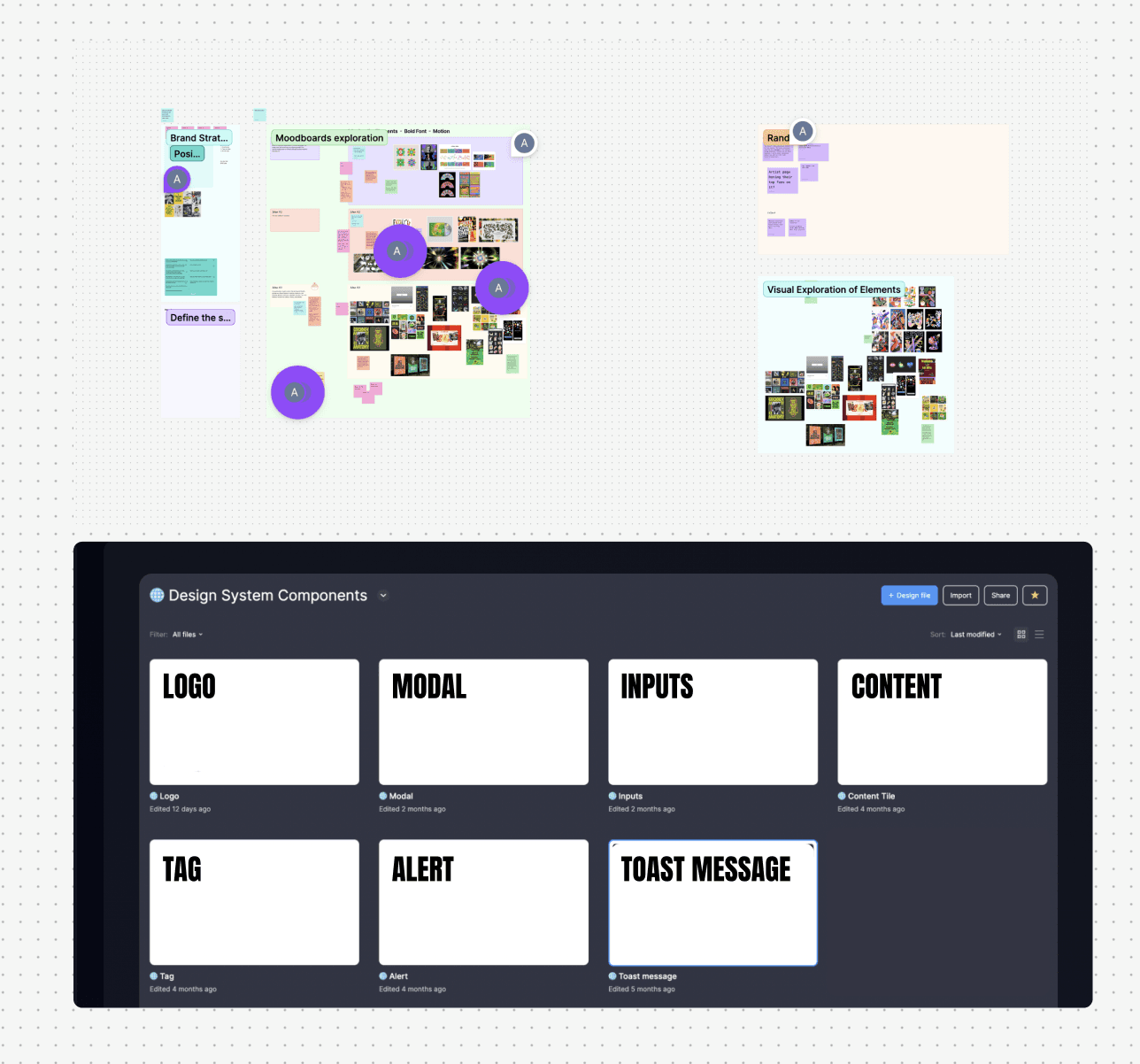
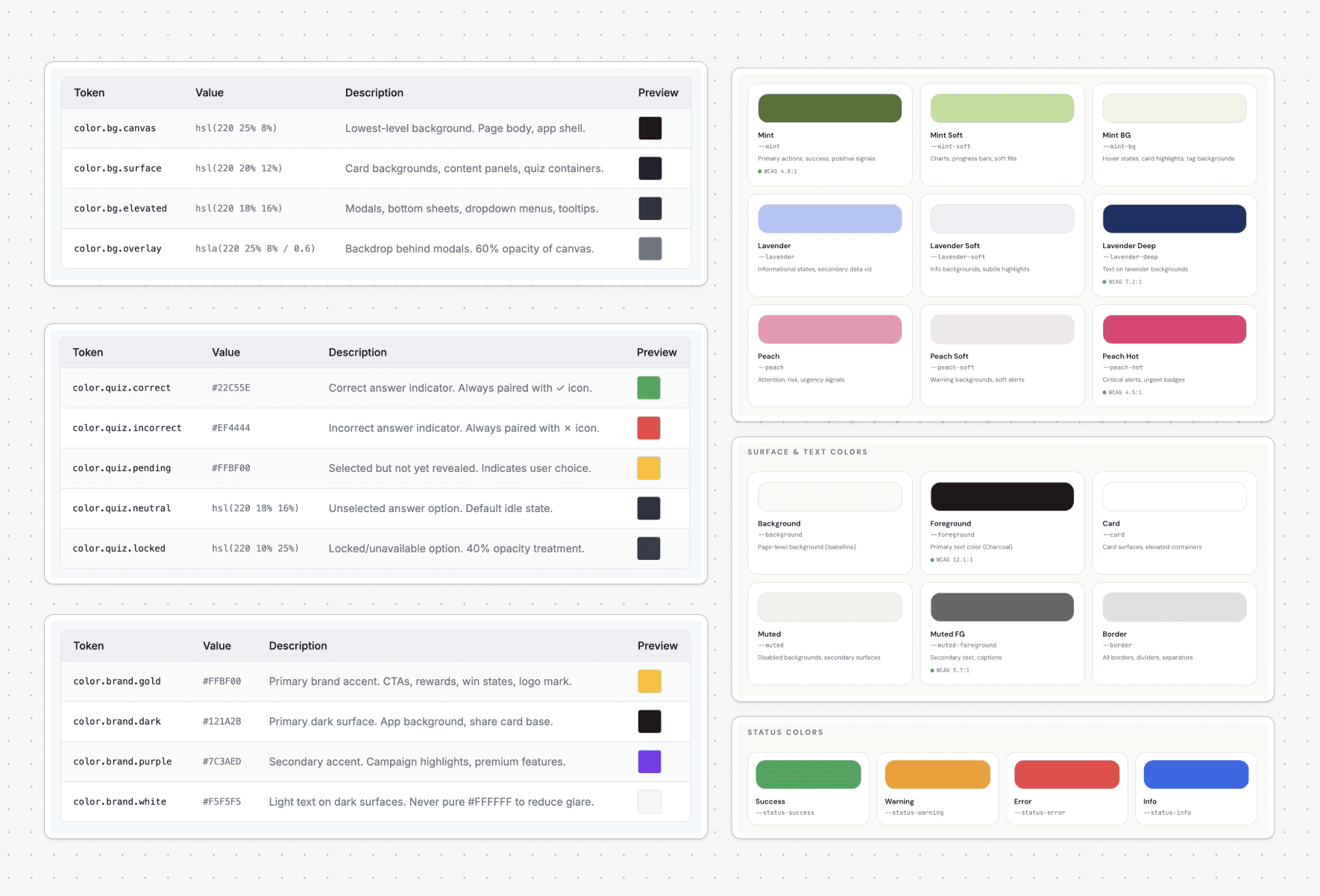
Most design systems operate within a singular, predictable scope. They serve one product, one audience, and one cohesive set of interaction patterns. The workflow is linear: establish foundations, build components, document rules, and ship.
At Muzify, I didn't have that luxury. As Lead Product Designer, I was responsible for the design language across two products with fundamentally opposing DNA.
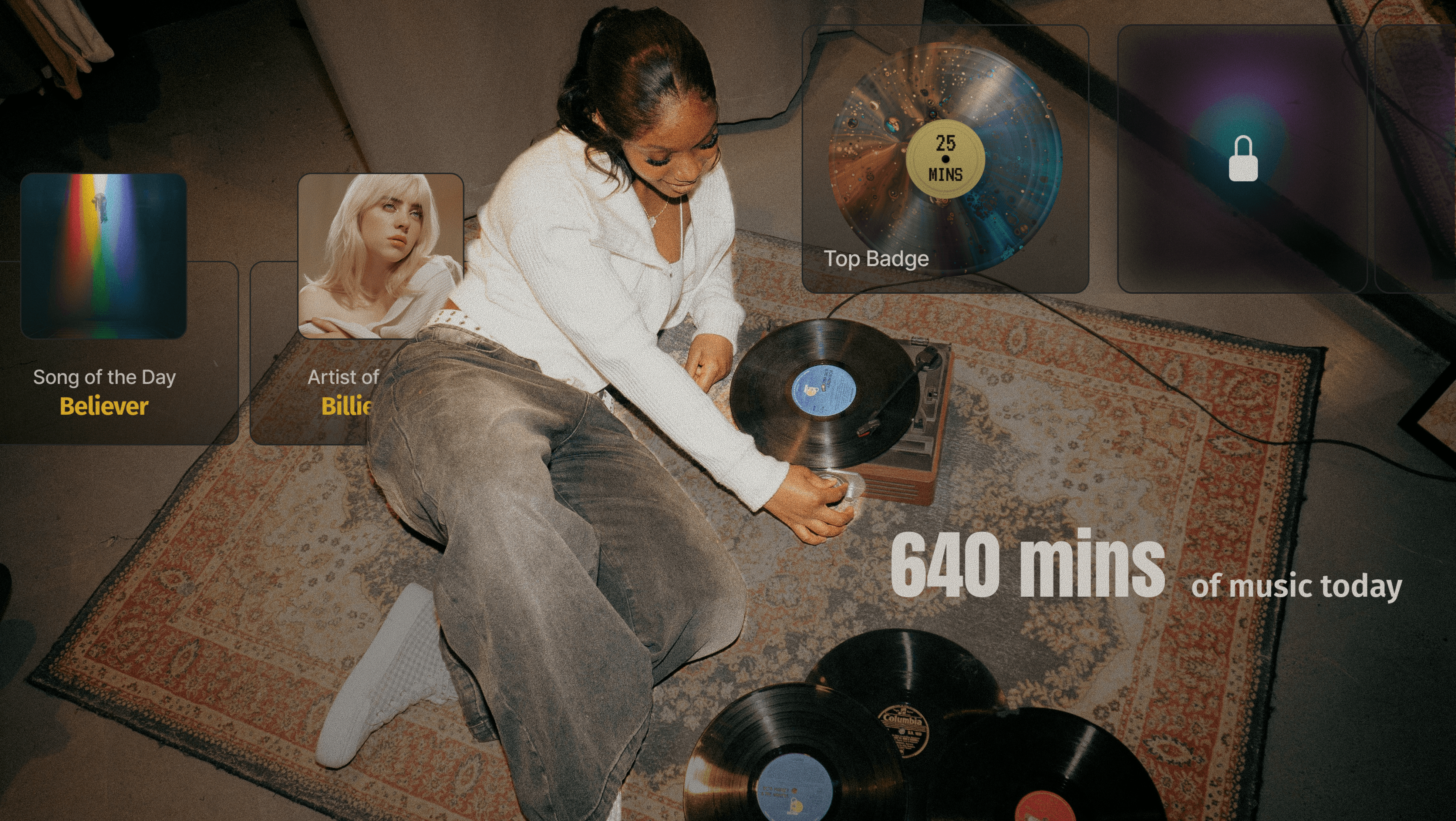
One was a B2C music quiz app built for viral growth and emotional delight. The other was a B2B AI co-pilot for professional artist managers where trust and information density were the entire value proposition.
The same component library could not serve both. A high-energy celebration animation that drove social shares in the quiz would feel juvenile in an analyst dashboard. Conversely, a high-density data table that gave the AI co-pilot credibility would feel hostile in a casual pub quiz setting.
While these products shared a brand name and a domain, they required distinct systemic identities. This case study explores how I architected both systems simultaneously and what the tension between them taught me about the true purpose of design systems.
Solution
Next work